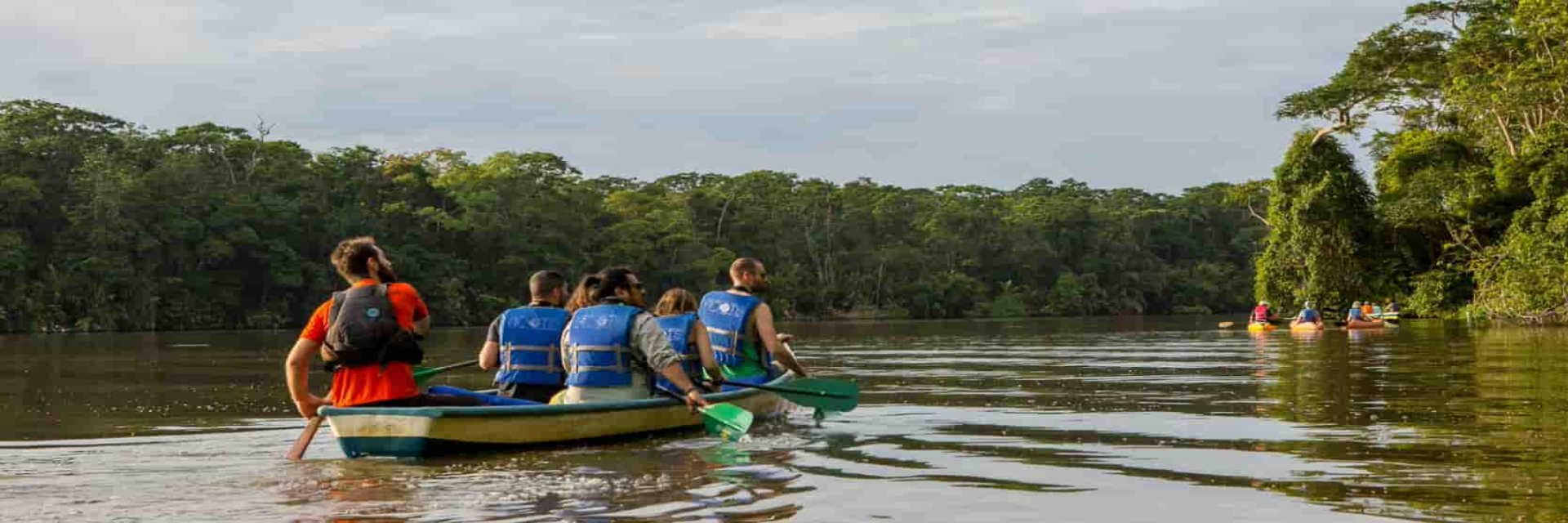
Family holidays to Costa Rica
Travel Costa Rica: A Living Classroom for Curious Families Costa Rica is one of those rare places where a family holiday feels like stepping into a living classroom. Instead of learning from screens or textbooks, children are surrounded by rainforest, volcanoes and wildlife, with naturalists and local communities as their guides. Every day becomes an adventure that is about far more than spotting animals. Families find new ways to connect with nature, culture and the wider world and children come home with stories that feel genuinely transformative.
Learning by Exploring in Arenal
For many families, travel in Costa Rica begins in the Arenal region, where the iconic volcano forms the backdrop to your first days. Trails around the volcano and nearby hot springs introduce children to geology in a way that feels effortless. They see how the earth’s energy shapes the landscape as they paddle in mineral pools and walk over cooled lava fields.
The surrounding rainforest is thick with life. A walk to La Fortuna Waterfall can become an easy lesson in how water carves its way through rock and how different plants and animals depend on clean rivers. Along the way, families might visit coffee and cacao farms and meet the people who grow everyday favourites. Children see how beans become coffee in a traditional pour-over or chocolate in a cup and they hear why sustainable farming matters for the forest that surrounds them.
Wildlife watching here is woven into everything. A morning might start with the call of howler monkeys, continue with a chance encounter with a tree frog, and end with the sight of toucans silhouetted against the evening sky. In the process, children absorb how many species share the same space and how each relies on the others to thrive.
Wild Nature on the Osa Peninsula
Flying south to the Osa Peninsula feels like crossing into a wilder Costa Rica. This remote corner is often described as one of the most biodiverse areas on the planet. It is an ideal setting for families who want their travel to Costa Rica to feel like a true nature immersion.
Guided rainforest walks reveal layers of life that would be easy to miss alone. Naturalists help children notice tiny insects on the forest floor, birds high in the canopy and mammals such as sloths and monkeys moving slowly or swinging overhead. Outings to secluded beaches add a different mood. Some children take their first surf lesson here, others simply enjoy playing on near-empty shores where the jungle runs right to the sand.
As night falls, Costa Rica reveals a different kind of wonder. In certain bays, bioluminescent plankton can turn the water into a trail of light as you move. Families watch the sea sparkle around their paddles or hands and learn how microscopic organisms create this effect. Some lodges can also introduce families to turtle conservation and coral restoration projects. Under careful supervision, children may help with turtle releases or assist with coral gardening, gaining a direct sense of how local people are working to protect marine life.
The Blue Zone of Nicoya: Everyday Lessons in Longevity
Further north, the Nicoya Peninsula offers a different perspective on travel in Costa Rica. This area is one of the world’s recognised Blue Zones, places where people often live long, active lives. Here, the focus shifts from dense rainforest to everyday life, food traditions and the rhythms that support wellbeing.
Families can spend time in small communities where maize, beans and fresh vegetables still sit at the heart of most meals. Children might roll and press tortillas, shape rosquillas from corn dough or help prepare simple empanadas. Parents taste coffee brewed slowly through a traditional cloth filter and hear why families value unhurried meals and locally grown ingredients.
Meeting artisans and elders brings the concept of longevity to life. Children see that wellbeing is not only about diet but also about community, purpose and time spent outdoors. Travel in this part of Costa Rica shows them that living well is woven into daily habits rather than treated as a separate goal.
Living Culture Through Music and Craft
Family travel in Costa Rica also opens the door to living culture that stretches back generations. On the Nicoya Peninsula and in other regions, creative workshops invite families to join in rather than simply observe.
A marimba workshop might introduce the national instrument from the raw wood upwards. Children can watch how the keys are shaped, how the resonators are tuned and then try playing a few simple rhythms. Chorotega pottery sessions give them the chance to feel clay between their hands and decorate pieces with designs inspired by local stories. Even a gentle ride in a traditional ox cart can become a conversation about how people moved goods before roads and cars.
These moments keep young travellers engaged while showing them that culture is something they can take part in, not just something displayed behind glass in a museum.
Learning by Doing: Simple Environmental Solutions
One of the most inspiring sides of Costa Rica eco travel is the focus on practical, accessible conservation. Families are often surprised to find how simple ideas can improve local environments in visible ways.
In some workshops, children are invited to create small clay spheres that hold beneficial microorganisms. They shape the balls, learn what lives inside them and then gently place them in slow-moving streams or ponds. Over time, these “living marbles” help break down organic matter and improve water quality, which in turn supports healthier conditions for fish and other aquatic life.
By taking part themselves, children see that environmental care is not always abstract or distant. It can be as straightforward as a few ingredients, a set of instructions and a commitment to care for the places they visit.
Listening to the Forest: Sound as a Window into Nature
Another powerful strand of travel in Costa Rica comes through sound. Some families choose to experience the forest through bioacoustics and soundscape ecology, turning their attention away from sights and towards the layers of sound all around them.
Out in the field, children might wear sensory vests and headphones that amplify subtle noises. They listen for bird calls, insects, running water and the wind moving through leaves. With specialist microphones they record these sounds, then return to a base to see how scientists transform them into visual patterns on a screen.
Those images reveal how different times of day, different seasons and different habitats create distinct sound signatures. Families discover that by listening carefully, researchers can track changes in ecosystems and identify areas that might need more protection. For children and adults alike, this experience reinforces the idea that the forest has its own voice and that learning to hear it properly can change the way we respond to nature.
Boutique Lodges and Private Villas that Feel Like Home
The places you stay have a big influence on how Costa Rica travel feels for a family. Across the country, small lodges and private villas offer a mix of comfort and privacy, often with a strong commitment to sustainability built into their design.
Many are set within private reserves or on quiet stretches of coast. Mornings might begin with birdsong drifting through open windows and evenings might end with the sound of waves in the distance. Children can wander safe paths through gardens or look for wildlife just outside their door while parents relax on a terrace or by a pool.
These properties often prioritise local materials, renewable energy and community employment. Cooking classes sometimes take place in open kitchens using fruit, herbs and vegetables grown nearby. Menus are designed around regional ingredients rather than imported goods, reinforcing what children have seen on farms and in communities. Private guiding and flexible activities make it easier to tailor each day to your own family’s pace and interests so no two trips feel quite the same.
Why Family Travel to Costa Rica Leaves a Lasting Mark
A family journey through Costa Rica is not about racing through a checklist of sights. It is about lingering long enough for children to feel the place beneath their feet, hear the forest around them and share time with the people who call it home.
They remember the first time they saw a sloth up close or watched tiny turtle hatchlings shuffle towards the sea. They remember the smell of freshly ground corn on their hands, the cool of a waterfall pool after a hot walk, the way the night sky looked from an unlit beach. Those experiences quietly shape their understanding of nature, culture and their own place in the world.
For families who want their holidays to spark curiosity, nurture empathy and build a stronger connection with the planet, travel in Costa Rica offers one of the most rewarding choices you can make. Get in touch to find out more about what I can help with when planning your holiday to Costa Rica.