Lewa Conservancy: Why It's One of My Favourite Places in Kenya
Some safari moments stay with you long after the dust has settled. For me, Lewa began with a mother cheetah and her four cubs.
After leaving Meru National Park, our second stop in Kenya, we flew to Lewa Wildlife Conservancy, a private conservation area on the Laikipia Plateau, north of Mount Kenya. It was our second safari destination, but the landscape felt completely different. Meru had been warmer, greener and more tropical; Lewa was higher, cooler and more open, with dry grasslands stretching beneath enormous skies.
On our very first game drive in Lewa, we were still settling into the rhythm of the conservancy when our guide spotted them: a mother cheetah with four cubs. The cubs moved close to their mother, full of energy and curiosity, while she watched over them with the calm alertness of an animal that knew the bush better than any of us ever could.
We could have ended our stay there and felt completely satisfied. But Lewa had only just begun to reveal itself.
The mornings and evenings were surprisingly chilly particularly during the first and last hour of a game drive. Wrapped in layers as the sun rose, we watched the landscape slowly come to life.
Our base was Elewana Kifaru House, a small and intimate lodge within the conservancy. It felt less like arriving at a hotel and more like being welcomed into someone’s beautiful home. There were only five thatched cottages, lawns filled with birdsong and an infinity pool overlooking the plains.
The lodge also had its own vegetable garden, supplying fresh produce for the kitchen. It was a small detail, but one that captured the feeling of Kifaru House: personal, thoughtful and closely connected to its surroundings.
At the time of our visit, the bathrooms were due to be updated later in 2026. I will be very interested to see how they look after the refurbishment, but the rest of the lodge already had an easy, comfortable charm that made it difficult to leave and these rooms are a fabulous is size particularly for families!
Our guides, Philip and Godfrey, were a huge part of the experience. Their knowledge was extraordinary, but it was their patience and enthusiasm that made the game drives so enjoyable. They never rushed us from one sighting to another. Instead, they encouraged us to pause, watch and notice the smaller details—the movement of a bird, the tracks in the dust or the sudden silence that can mean something is nearby.
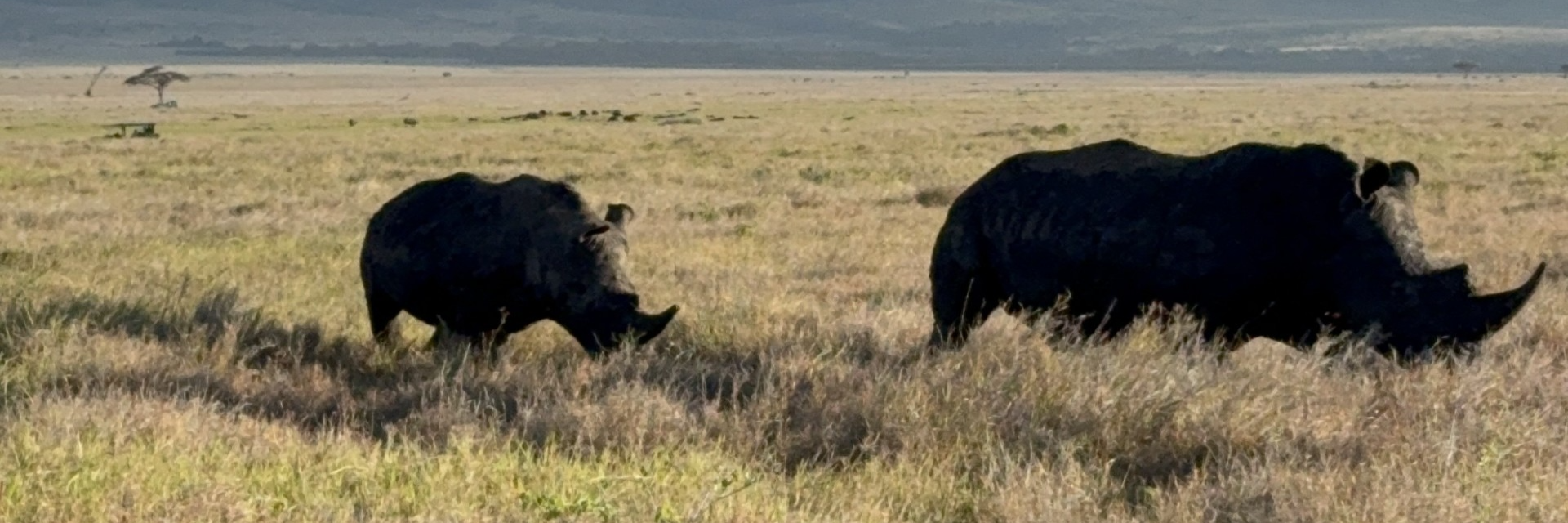
Lewa is famous for its rhinos, and sightings are almost guaranteed. Yet what makes seeing them here so moving is understanding how much effort has gone into protecting them.
Kenya’s black rhino population was devastated by poaching, falling from around 20,000 in the 1960s to fewer than 300 by the 1980s. Lewa was created from a desperate need to protect these animals, and its conservation work has helped turn one of Kenya’s darkest wildlife stories into one of hope.
Today, rhinos are monitored individually. Specialist officers record their movements, births and deaths, while veterinary teams are ready to intervene when an animal is injured. Anti-poaching teams and tracker dogs provide protection, and the work continues every day, often unseen by visitors.
That is the part of safari that is easy to forget. The beautiful sightings are only possible because of the people working quietly behind the scenes to keep the animals safe.
Lewa also takes an unusually careful approach to tourism. Every vehicle is fitted with a tracker, allowing the control centre to see where it is and how long it remains in one area. There is a strict limit of three vehicles at any wildlife sighting.
This matters. Animals are not surrounded, chased or hounded simply because a sighting is exciting. They are given space to behave naturally, while visitors are able to enjoy the moment without a crowd of vehicles jostling for position.
Because Lewa is a private conservancy, game drives are reserved for guests staying at lodges within the conservancy. The result is a much quieter and more personal safari. In a national park, the experience is governed by different rules; here, there is greater flexibility to offer walking safaris, carefully managed off-road driving and a more individual approach to wildlife viewing.
It never felt rushed. There was time to sit quietly beside a rhino, watch a herd of zebra move across the plains or wait patiently for a cheetah cub to emerge from the grass.
Lewa is also home to endangered Grevy’s zebra, which are taller and more delicate than the familiar plains zebra. Their thin stripes do not continue beneath the belly, and their large ears give them an almost endearing appearance.
We also learned about the pancake tortoise, a critically endangered species with a flat, flexible shell that allows it to squeeze into narrow rocky spaces. It was another reminder that conservation is not only about the most famous animals. Some of the most important work is being done to protect creatures that many visitors might otherwise never notice.
One afternoon, we left the open plains behind and travelled to Ngare Ndare Forest. It felt like entering another world. Ancient trees formed a green canopy above us, and the air was cooler and quieter.
After walking through the forest and crossing the canopy walkway, we reached the waterfalls. The water was cold—very cold—but that did not stop us. We jumped in, laughed at the shock and emerged feeling completely refreshed.
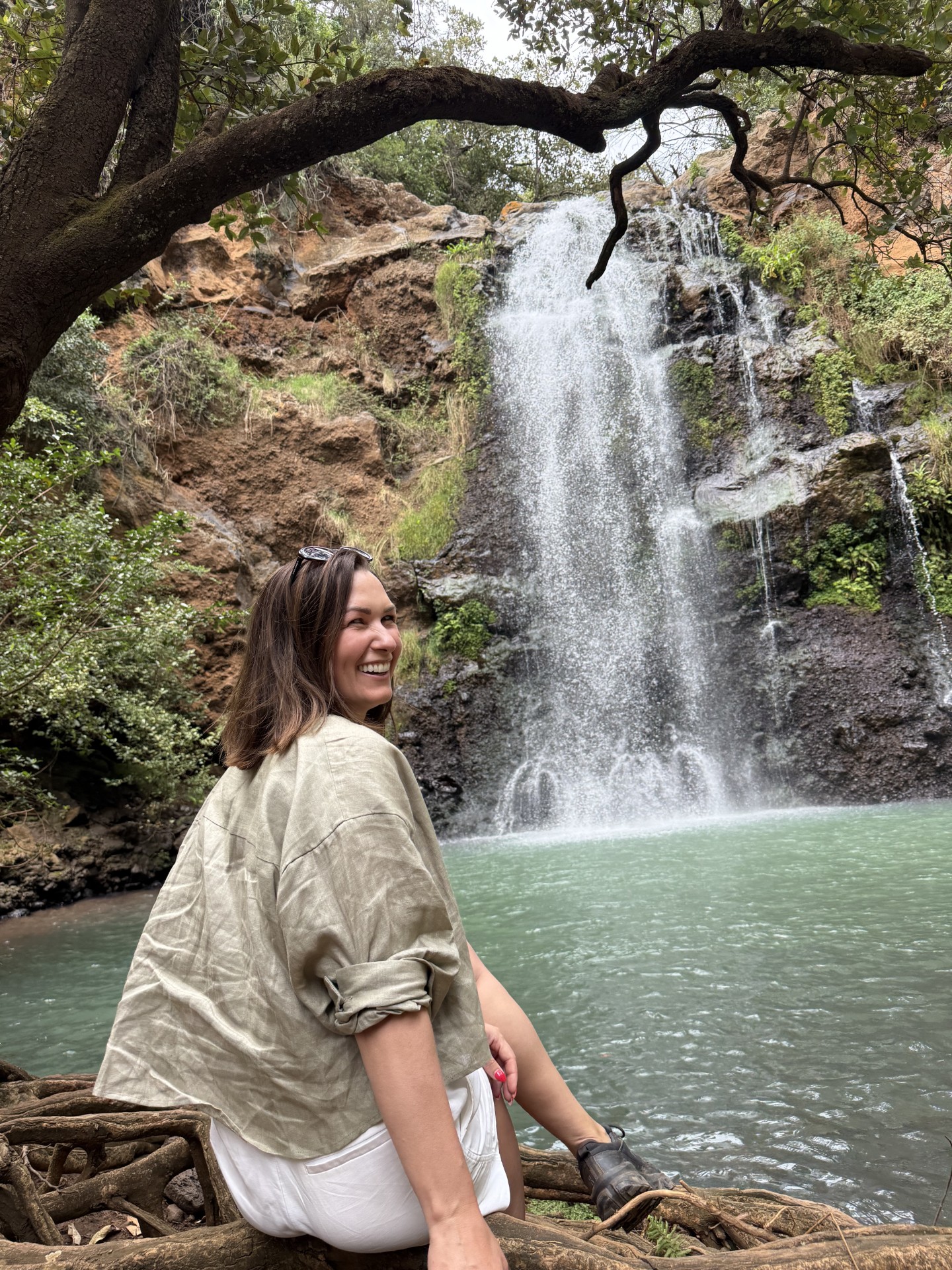
It was one of those experiences that makes a safari feel like so much more than sitting in a vehicle. There was adventure, exercise and the simple joy of doing something unexpected in the middle of Kenya.
The forest is also an important wildlife corridor, connecting Lewa with the Mount Kenya ecosystem. These corridors allow elephants and other animals to move between habitats, which is increasingly important as wildlife faces pressure from human development and changing conditions.
During our stay, we also visited Elewana Lewa Safari Camp, which had recently undergone a complete rebuild. As travel counsellors, we were among the first people to see the new-look camp. It was fascinating to see how the property had been refreshed while still retaining its connection to the landscape.
Although the wildlife was the immediate attraction, Lewa’s deeper story is about people.
The conservancy supports education, healthcare, clean-water projects, scholarships, agriculture and women’s enterprise programmes in the surrounding communities. Tourism helps fund this work, creating a direct connection between a visitor’s stay and the wider conservation effort.
One of the most inventive projects uses beehives to help protect crops from elephants. Elephants dislike bees, so the hives can act as a natural deterrent, while the honey provides local women with an additional source of income.
This is what makes Lewa so inspiring. Conservation is not treated as something separate from everyday life. The communities living around the conservancy need to see a benefit from protecting wildlife, and Lewa works hard to make that connection real.
There are schools to support, clinics to maintain, water projects to develop and vulnerable children to help. The future of the wildlife depends on the future of the people living alongside it.
By the end of our stay, Lewa felt much more than a safari destination. It felt like a place with a purpose.
Yes, there were the unforgettable sightings: the cheetah and her four cubs, rhinos moving quietly across the plains and the distinctive Grevy’s zebra. There were cold morning drives, peaceful evenings beside the pool and the exhilaration of jumping into the waterfalls at Ngare Ndare Forest.
But there was also the feeling that every experience had meaning.
Lewa offers the intimacy of a private conservancy, the excitement of exceptional wildlife and the reassurance that tourism is helping protect both animals and communities.
It is a wonderful complement to the Maasai Mara. The Mara offers vast plains and spectacular concentrations of wildlife; Lewa feels quieter, more personal and deeply connected to conservation.
For me, Lewa became one of the favourite places of our entire Kenya journey—not because it offered the biggest or most dramatic safari, but because it made us feel part of something important.
And, of course, because on our very first game drive in Lewa, it gave us a mother cheetah and four cubs.
Thinking of a safari? Contact me today.